Safer play at a casino without ID: the limits you set yourself
Your play · budget, time and help
A casino without ID asks less of you on the way in. It also asks you less about yourself: nobody checks how much you have lost or how long you have been playing. So the limits are yours to set, before you start, and it is worth knowing where to ask for help if it comes to that.
A casino without ID is convenient because it asks you nothing on the way in. That same convenience has a less visible side: there is nobody there to ask whether you are going too far. This page is about that.
Three limits before you deposit
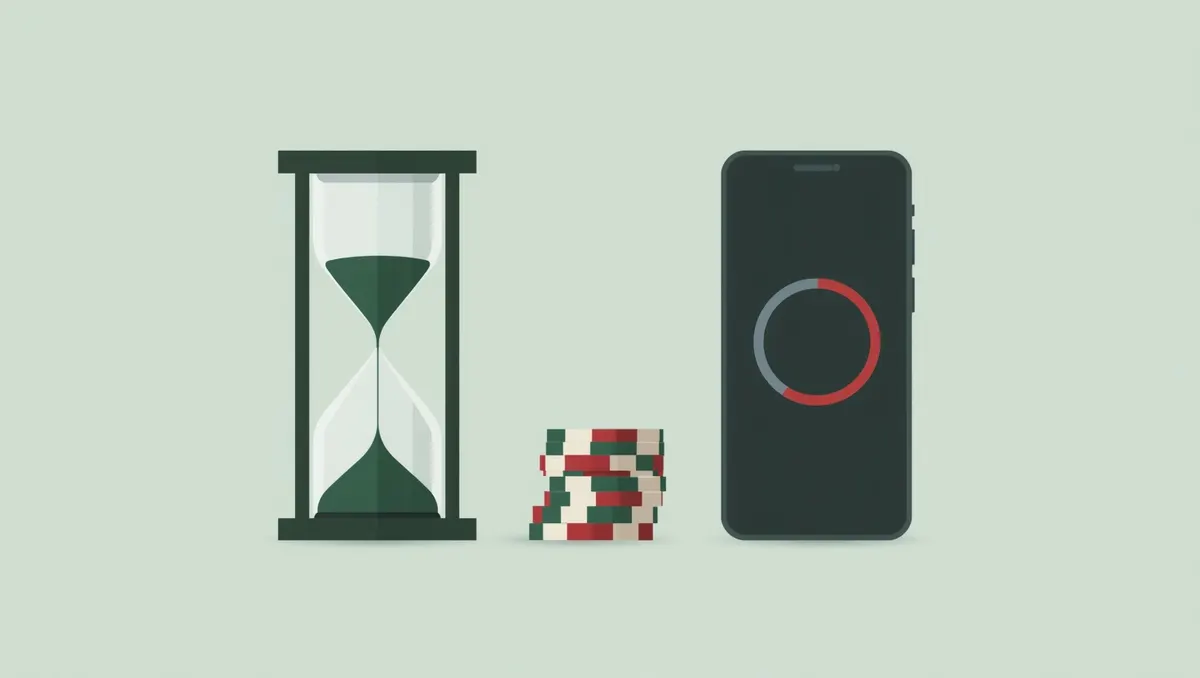
1. A budget. An amount per month you could lose entirely without touching rent, food, bills or debts. If you cannot name the figure, you are not ready to deposit.
2. Time. How long each session will last. A timer on your phone works better than willpower. When it rings, it is over, winning or losing.
3. What you do with winnings. Decide in advance how much you take out if you win. Withdrawing often, rather than letting the balance grow, protects what you won and teaches you, along the way, how the casino handles payouts. We cover that in withdrawing without an ID.
The tools inside your account
Almost every casino on our list has a responsible play section in the profile. The usual set:
- A deposit limit, daily, weekly or monthly.
- A loss limit or a stake limit.
- A time reminder during the session.
- A break of 24 hours, a week or a month.
- Self-exclusion, long or permanent.
Switch them on the first day, while your head is clear. Lowering a limit is usually immediate; raising one usually carries a waiting period, and that is a good thing.
Bonuses and safer play
Bonuses with heavy wagering push you to play more than you meant to in order to withdraw. A ×35 requirement on €100 means €3,500 in bets. If stopping is hard for you, bonuses are not for you. The real value, if you play often, sits in cashback and rakeback, which give something back without making you bet more.
Warning signs
Stop and ask for help if you recognise any of these:
- you play to win back what you have lost;
- you hide from the people around you how much you play or how much you lose;
- you use money you need for other things, or borrow in order to play;
- you set out to stop and cannot;
- play is taking hours from your sleep, your work or the people close to you.
Where to ask for help
FEJAR (Federación Española de Jugadores de Azar Rehabilitados) brings together associations that help players and their families across Spain, free of charge. Its site will find you the nearest one. You can also speak to your GP, who can refer you to the health services in your region.
If you live with someone who plays too much, those same associations help families too.
Looking after your data is part of safer play
Part of playing safely is not exposing your identity more than you need to: sending papers only when they are due and only to casinos whose licence you have checked. That is in what they do with your ID and in checking a licence.